

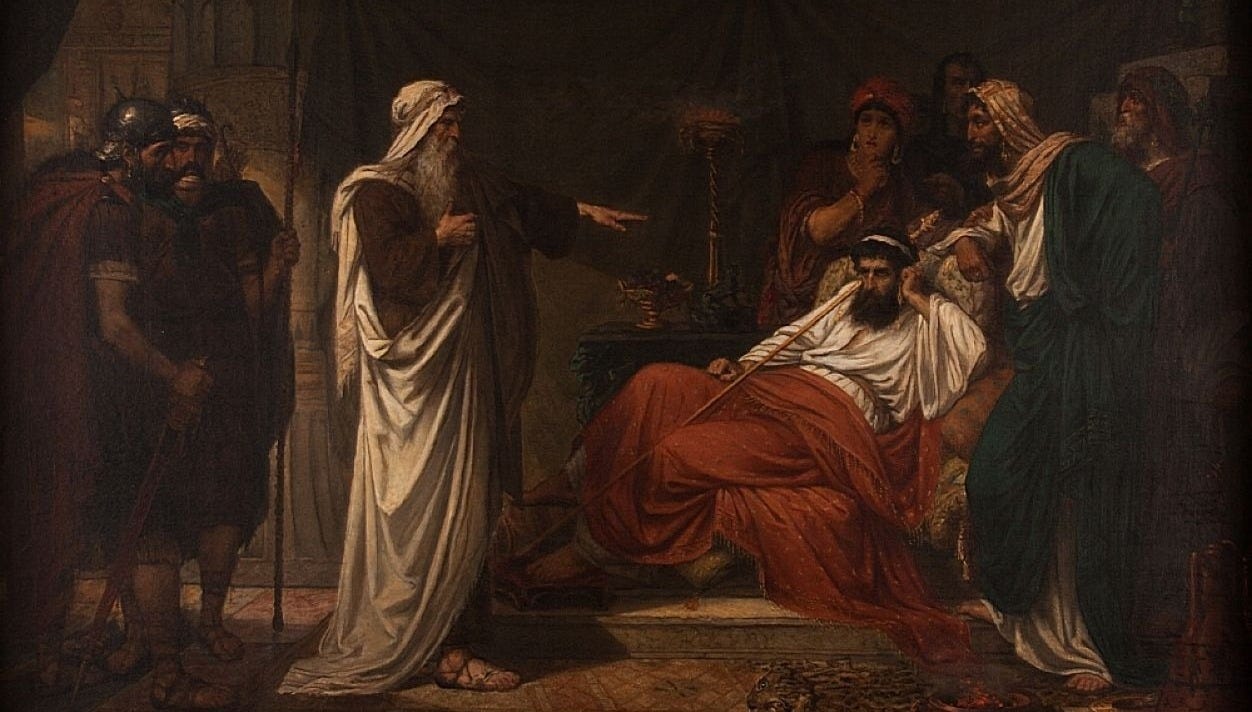
I’ve been reading through the books of Samuel over the past couple weeks and have been particularly struck by the arc of David’s life.
David’s story may be the most dramatic rise and fall in all of Scripture. David begins as an overlooked shepherd boy who rises to power on the strength of God’s anointing and ends as a king whose family is fractured by violence, rebellion, and death.
The Rise
We first meet David as a shepherd, the youngest son in his family, chosen by God to be anointed as the future king of Israel.
Then he kills Goliath with a sling and a stone. He’s brought into King Saul’s service and finds success wherever Saul sends him. We’re told all Israel and Judah loved David.
Saul becomes jealous of David and tries to kill him over and over again. David has at least two different chances to kill Saul himself and take the throne that God had promised him, but he refuses both times. David just kept waiting. He kept trusting God.
Eventually, Saul dies in battle, and David becomes king over Judah. After more conflict, David becomes king over all of Israel.
Once king, David captures Jerusalem and establishes it as his capital. He defeats Israel’s enemies. He brings the ark of God to Jerusalem. And then God makes a covenant with him, promising to establish his house and his kingdom forever.
David is about as successful as a person can be. He’s risen from shepherd to king. He’s defeated all his enemies, secured his kingdom, and has a promise from God that his dynasty will last.
The Turning Point
And then everything changes.
At the height of his power, David makes a string of terrible decisions.
Instead of going to war with his army, he stays behind in Jerusalem. From the roof of his house, he sees Bathsheba, the wife of Uriah, one of his own soldiers. David sends for her. He knows she’s married, but he takes her anyway.
Bathsheba becomes pregnant and, instead of owning up to his sin, David hatches a plan to cover it up. He brings Uriah home from the battlefield, hoping he’ll sleep with his wife and make the pregnancy appear to be his. But Uriah refuses, because he can’t bring himself to enjoy the comforts of home while his fellow soldiers are at war.
So, David sends Uriah back to the battlefield with instructions to put him in the midst of the fiercest fighting and then withdraw from him.
Uriah dies, and David takes Bathsheba as his wife.
The same man who trusted God enough to wait for the throne instead of taking it for himself is now using his power to take whatever he wants while breaking a lot of God’s commandments along the way.
And this is when David’s destiny begins to turn. God sends a prophet to confront David, and David eventually repents. But his repentance doesn’t erase the consequences of his actions. God announces judgment on David’s house and David’s fall begins.
The Fall
The son born to Bathsheba dies.
One of David’s sons, Amnon, sexually assaults his half-sister, Tamar. David is angry but he doesn’t deal with Amnon’s sin, which creates another fracture in his family.
Absalom, Tamar’s brother, murders Amnon.
Then Absalom turns his ire against his dad. He makes a plan to overthrow David and actually wins the hearts of many Israelites. David is forced to flee Jerusalem, running from his own son.
The kingdom descends into civil war. Absalom is eventually killed by David’s men, and David’s throne is restored. But David’s grief over his son nearly undermines the trust of the army that saved him.
By the end of the story, you feel more pity for David than admiration for him. The man who seemed almost invincible at the height of his reign finishes his life in the midst of family conflict, political instability, and the consequences of his decisions.
The Lesson
So, what can we learn from David?
It isn’t that things go well when we’re good and bad when we aren’t. That’s not what Scripture teaches. In fact, God keeps his promise to David and sustains his family despite his moral failures. Spoiler alert: Jesus is a descendant of David.
No, I think the lesson is that prosperity can be a bigger threat to our spiritual life than adversity. The worst thing David ever did happened when he was at the height of his power. It isn’t a stretch to think it happened because he started to think, even if only subconsciously, that he didn’t need God as much anymore. He had enough of the things that the world values to be self-reliant and comfortable.
Comfort lulls us into complacency. It tempts us into believing we can get by without God.
Let’s face it, the overwhelming odds are that you and I are going to eat today whether we follow Jesus or not. We’ll have clean water to drink. We’ll have homes to go to if the weather is bad. Our lives won’t be in imminent danger. These are all good things, of course. But, if we aren’t careful, we stop counting these comforts as gifts from God and begin seeing them as things we’re entitled to.
I think this gives us a clue about why Jesus talked about it being easier for a camel to go through the eye of a needle than for a rich person to enter the kingdom of God. It isn’t impossible, mind you, but it’s difficult. It’s human nature to become attached to our things. And the more we have, the easier it is to feel like we need the things more than we need God.
Prosperity “knits a man to the world,” the senior demon Screwtape tells his apprentice Wormwood in The Screwtape Letters. “It makes him feel like he’s ‘finding his place in it,’ while in reality, the world is finding his place in him.”
How many of us have built a comfortable, complacent identity that’s deeply tied to earthly success? How many of us find it harder to resist the pull of the world because of what our identity is built upon? Prosperity strengthens our attachment to this life and dulls our spiritual vigilance, making it easier for our enemy to lead us astray.
David’s story reminds us that no one outgrows dependence on God. Now, you don’t have to shun all of life’s comforts but don’t allow comfort to become a spiritual trap. Prosperity is a blessing if our hearts are right, but it’s a curse if it makes us careless.
So, let’s stay vigilant! Let’s Guard our hearts against the complacency that prosperity and abundance foster. Let’s use our abundance for the gospel. Let’s be willing to part with anything that stands in the way of surrendering ourselves to Jesus.
Let’s be like the David who was fighting giants and not the David who was aimlessly wandering around on his rooftop.